

Speed Queen Washers and Dryers: Are They Really Built Better?
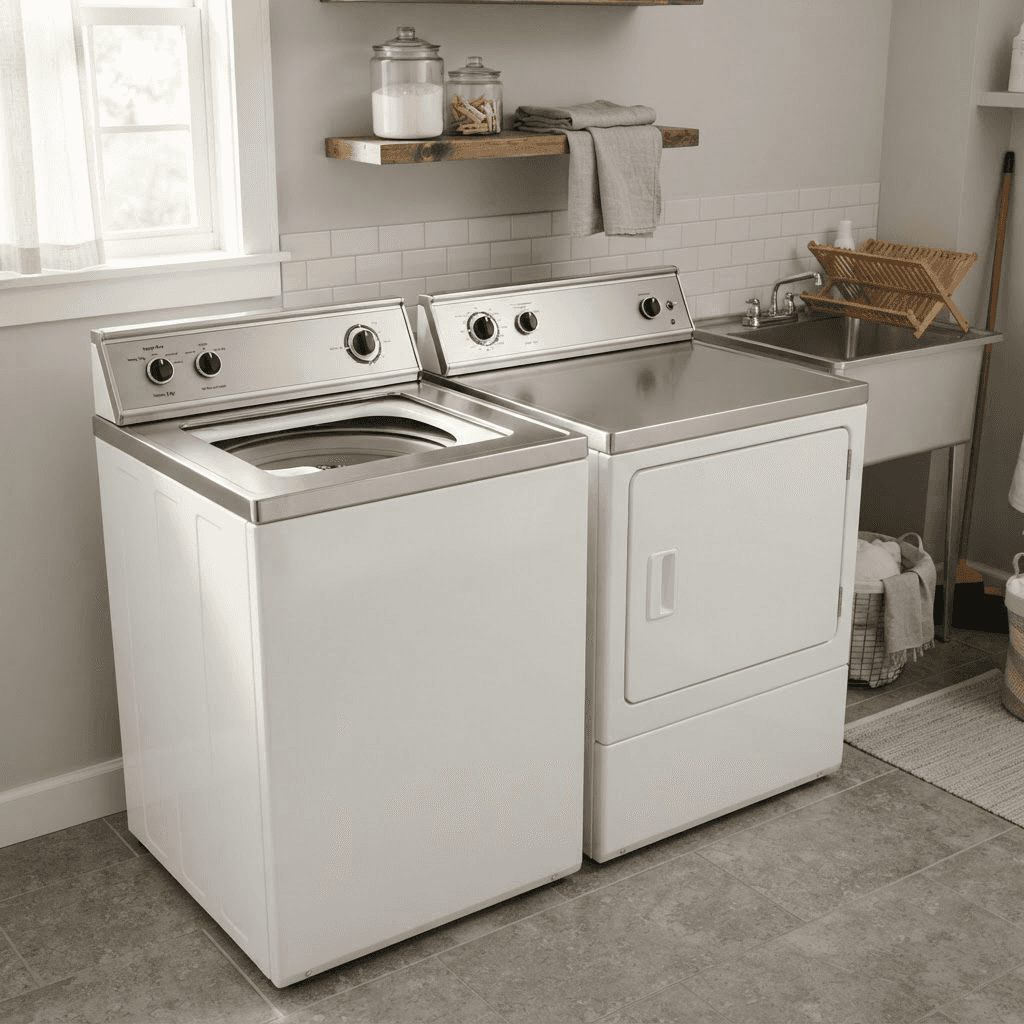
Speed Queen has built its reputation on one pitch: its residential machines are built on the same commercial platform used in laundromats, so they are made to run harder and last longer than a typical mainstream washer or dryer. Whether that is worth the price difference depends on what you actually want out of a laundry machine.
The biggest design difference is mechanical simplicity. Many Speed Queen models still use a heavy-duty transmission, a stainless steel wash basket, and either a traditional agitator or a wash plate, paired with simple electromechanical dial controls rather than a touchscreen or electronic control board. Fewer electronic components generally means fewer things that can fail, and it also means a technician can diagnose a stuck dial or a bad switch far more easily than tracing a fault on a control board.
Mainstream brands like Whirlpool, Maytag, LG, and Samsung lean the other direction: more wash cycles, more sensors, quieter operation, and features like steam, app connectivity, and load-sensing water levels. Those features genuinely improve wash performance and efficiency in a lot of cases, but each added sensor, motor type, and circuit board is also another part that can eventually need service. In our experience, high-efficiency front loaders and feature-heavy top loaders from mainstream brands need more electronic and sensor-related repairs over their lifespan than a comparable Speed Queen.
Speed Queen backs this up with warranty length rather than just marketing language. Their residential top-load washers typically carry a longer parts warranty than most mainstream competitors, sometimes several times longer, and washers with a mechanical timer commonly and dryers a mechanical timer, which reflects real confidence in the drivetrain. That said, Speed Queen machines usually run shorter, simpler cycles with less water and cycle customization than newer HE machines, and they tend to cost more upfront for a comparable capacity.
If you wash heavy, frequent loads (large families, work clothes, cloth diapers) and want a machine that a technician can service for another 15 to 20 years, a Speed Queen is a reasonable investment. If you care more about wash customization, steam cycles, quiet operation, or app control, a mainstream HE machine will likely serve you better, and just plan for more maintenance over its life. Either way, when something does go wrong, we service all major residential brands and can tell you honestly whether a repair or a replacement makes more sense for your specific machine.
Not a fix you want to tackle yourself?
We're happy to help, over the phone or in person.